WHAT IS PROGRAMMING LANGUAGE?

A programming language is a special language programmers use to develop software programs, scripts, or other sets of instructions for computers to execute. The following is an index of the different programming and scripting languages currently listed on our site.
There are 5 Generations Language:
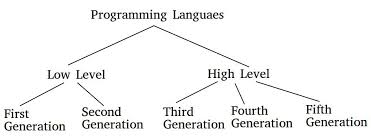
- First generation languages (1GL)
- Second generation languages (2GL)
- Third generation languages (3GL)
- Fourth generation languages (4GL)
- Fifth generation languages (5GL)
- Fourth generation languages (4GL)
- Third generation languages (3GL)
- Second generation languages (2GL)
First Generations Languages (Machine languages):

Its a lower level Language, That are machine language. The processor actually given to work on binary number 1’s and 0’s. In the 1940s and 1950s, computers were programmed by scientists sitting before control panels equipped with toggle switches so that they could input instructions as strings of zeros and ones.
Second generations language (assembly LAnguages):

The second-generation languages, or 2GL, are also low-level assembly languages. They are sometimes used in Kernels and hardware drives, but more commonly used for video editing and video games. By the late 1950s, this language had become popular. Assembly language consists of letters of the alphabet. This makes programming much easier than trying to program a series of zeros and ones. Second-generation language use increased when Grace Hopper developed FLOW-MATIC, a language that made programming easier.
Third Generations languages (procedural languages):

The Third generation language or 3GL, are High-level languages, such as C, C++, JAVA, Java Scripts, and Visuals basic. In the early 1960s, BASIC language designed and used by nonprofessional programmers. BASIC remained popular during the 1970s and 1980s. Programs written in third-generation languages require more memory and run more slowly than those written in lower level languages.
fourth generation languages (declarative language):

The Fourth-Generations Language, or 4GL, are languages that consist of statements similar to statements in a human language. Fourth generation languages are commonly used in database programming and scripts examples include Perl, PHP, PYTHON,RUBY, and SQL. Fourth-generation languages attempt to make communicating with computers as much like the processes of thinking and talking to other people as possible. Fourth-generation languages typically consist of English-like words and phrases, some of these languages include graphic devices such as icons and onscreen push buttons for use during programming and when running the application.
fIFTH gENERATIONS lANGUAGES (artificial intelligence):

The fifth-generation languages, or 5GL, are programming languages that contain visual tools to help develop a program. Examples of fifth generation languages include Mercury, OPS5, and PROLOG. Fifth-generation languages are designed to make the computer solve a given problem without the programmer. This way, the user only needs to worry about what problems need to be solved and what conditions need to be met, without worrying about how to implement a routine or algorithm to solve them. Fifth-generation languages are used mainly in Artificial Intelligence.
REFERENCES:
https://www.geeksforgeeks.org/generation-programming-languages/
https://www.computerhope.com/jargon/num/1gl.htm
http://infotech100.weebly.com/distinguish-among-the-different-generations-of-programming-languages.html
https://www.slideshare.net/buxooabdullah/program-language-generation
https://www.computerhope.com/jargon/p/proglang.htm
https://wozyvul.bigskyquartet.com/declarative-language-and-procedural-language-27758al.html
 Nayeemzz Blog